

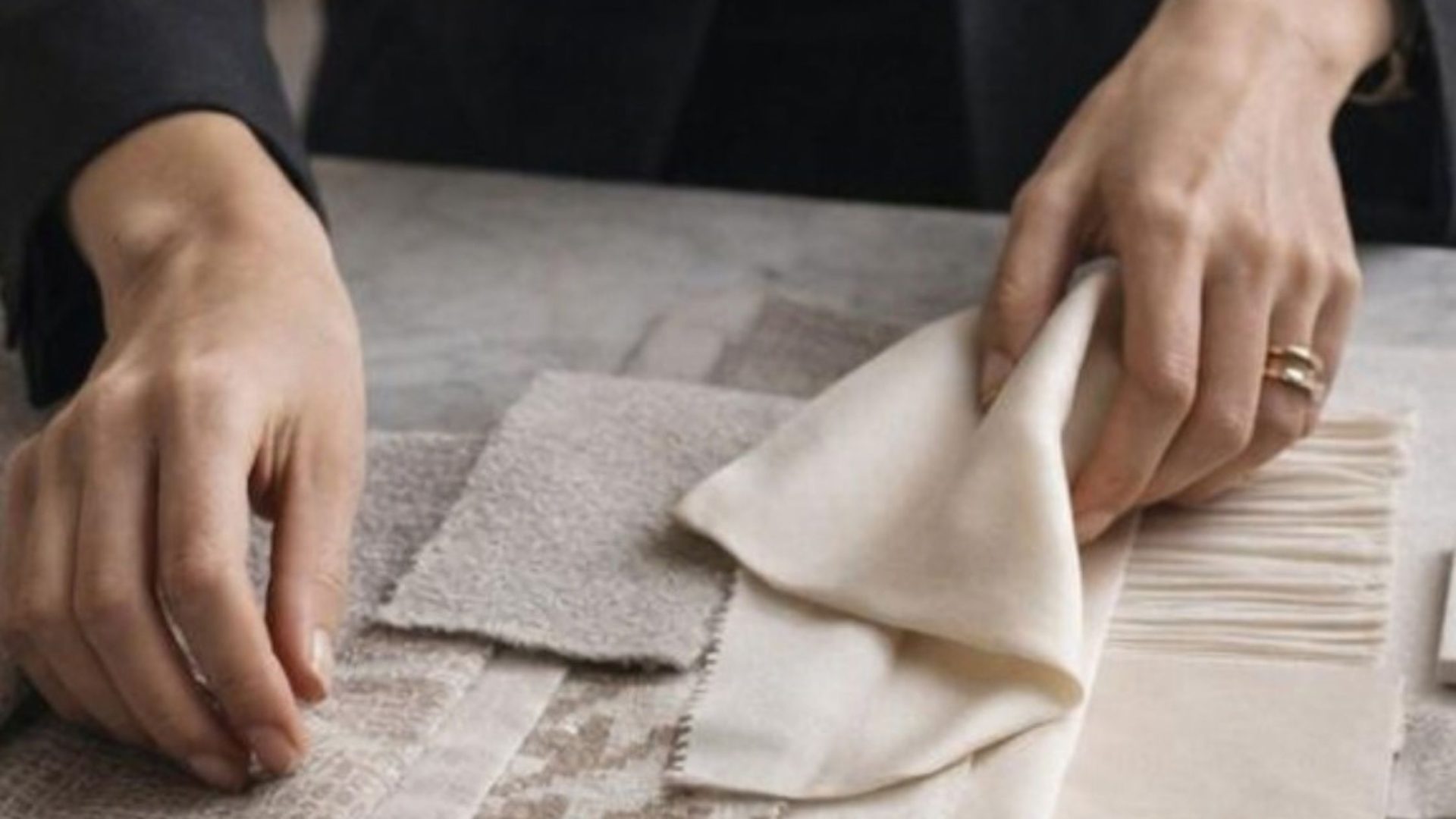
When designing a new furniture product, fabric is often chosen at the end. The shape, materials and proportions have already been defined, and textiles seem to have nothing more than the task of completing the design.
But fabric can be much more than that.
In textile design for furniture, surface, colour, materiality and pattern can become an integral part of the design process, helping to define the identity of a product, collection or interior.
This is the vision behind the work of POEMO DESIGN: integrating textile research into the creative process from the very early stages.
Why Fabric Is Part of Furniture Design
Fabric is not simply a surface. It has structure, weight, texture and colour, as well as a specific response to light and touch.
Choosing between velvet, bouclé, chenille, structured fabrics or lighter surfaces can completely change the perception of the same product.
For this reason, upholstery and furnishing fabrics are not simply an aesthetic choice, but a genuine design decision.
Textiles help create the relationship between shape, colour, materiality and space.
Textile Design: Starting with Materiality
The traditional process often follows a linear path:
concept → shape → materials → production → fabric
Textile design, however, can become part of the project from the very beginning:
textile research → concept → colour and materiality → product → space
With this approach, a texture can suggest a shape, a pattern can become the starting point for a collection, and a colour palette can define the character of a new furniture range.
Fabric therefore does not simply adapt to the product: it can help determine its identity.
From Textile Design to Furniture Collections
Developing a new furniture range often requires more than designing a single fabric. It calls for a coherent textile collection capable of bringing together different surfaces, colours and patterns.
The collection may combine:
• plain and textured fabrics;
• graphic patterns and more understated motifs;
• neutral colours and accent shades;
• smooth surfaces and tactile textures;
• contemporary elements and natural references.
The collection thus becomes a genuine visual grammar, capable of creating continuity between different products and strengthening brand recognition.
Colour and Textile Pattern Design
In textile design for furniture, colour and materiality are closely connected.
A neutral palette can communicate elegance and a contemporary feel, while more intense shades can transform a product into a statement piece. Natural colours, meanwhile, can work in dialogue with materials such as wood and stone.
Textile pattern design also requires a specific design approach.
When a pattern becomes a fabric, its scale, depth, perception of colour and relationship with light all change. The structure of the surface itself can alter the graphic result.
For this reason, a design intended for textiles must be developed with the production technique in mind from the very beginning.
Jacquard and Printing: Two Approaches to Textile Design
POEMO DESIGN develops designs for Jacquard weaving and printing, also exploring their colour variations.
In Jacquard weaving, the pattern is created through the structure of the fabric itself, producing sophisticated and tactile effects. Printing, on the other hand, works directly on the surface, offering extensive graphic and colour possibilities.
The choice of technique is therefore not merely a production decision: it is part of the creative process.
From Digital Design to Fabric
Moodboards, colour palettes, renderings and digital tools now make it possible to visualise many different solutions quickly. But fabric remains a physical material.
It moves, folds, reflects or absorbs light, and its perception changes depending on distance and touch.
This is why moving from the design to the textile sample is essential. Working with the actual material makes it possible to test colours, proportions, textures and construction, and to refine the project.
Custom Fabrics for Furniture
Collections available on the market do not always meet the specific requirements of a brand or product.
In these cases, custom textile design makes it possible to create exclusive surfaces based on a company’s identity, a colour palette, a concept or a specific product requirement.
The surface is therefore designed together with the product, creating a more coherent, distinctive and recognisable result.
Textile Design in Interior Design
The relationship between textiles and design is not limited to furniture.
Curtains, upholstered elements, panels, coverings and textile accessories all contribute to creating the atmosphere of a space.
For architects and interior designers, fabrics for interior design can create colour continuity, introduce contrasts, enhance light and connect different materials and surfaces.
Textile design thus becomes a tool for defining the overall perception of an environment.
POEMO DESIGN: Textile Research and Design
The work of POEMO DESIGN begins with research and creative consultancy, developing through different stages: textile and colour research, collection development, Jacquard and print design, fabric selection consultancy and the design of customised solutions.
The process can involve furniture companies, manufacturers, architects, interior designers and design studios.
For special projects, the in-house atelier also makes it possible to create customised textile elements and one-of-a-kind pieces, maintaining continuity between concept, materiality and final result.
Fabric as a Starting Point
In an increasingly crowded furniture market, differentiation can also come through the surface.
A texture, colour, pattern or particular combination of materials can become a distinctive element of a product and a brand.
For this reason, textile design for furniture does not necessarily have to come at the end of the design process.
The question is not only:
“Which fabric can we use for this product?”
But also:
“What can this fabric become?”
From this perspective, textiles can become a collection, define an interior, characterise a brand or even give rise to a new furniture product.
This is precisely the space in which POEMO DESIGN operates: between research, colour, materiality and design, transforming fabric from a simple covering into a creative and design element.