

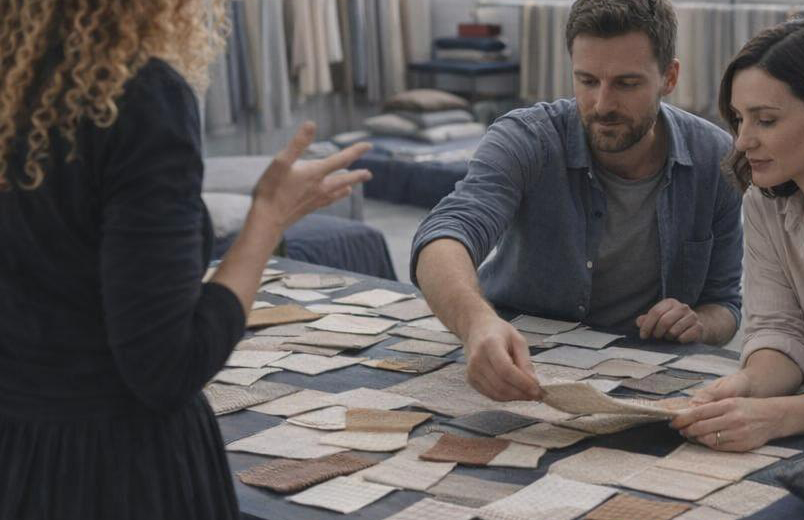
When discussing luxury interior design, people often think of sophisticated forms, iconic furniture, or premium finishes.
Yet one of the elements that contributes most to the perceived value of a space is fabric.
Texture, color, softness, and bespoke craftsmanship transform a simple furnishing into a sensory experience that conveys elegance, comfort, and exclusivity.
The choice of textiles is therefore far more than an aesthetic detail—it is a strategic design element that shapes the way a space is experienced and remembered.
Why Fabrics Are Essential to the Perception of Luxury
Luxury is not simply a matter of price.
Above all, it is a feeling created through the balance of materials, proportions, lighting, and meticulous attention to detail.
A high-quality fabric immediately communicates craftsmanship, expertise, and thoughtful design.
Conversely, a textile that lacks coherence with the overall concept can diminish the impact of even the most beautifully designed piece of furniture.
In interior design, perceived value is built through elements that engage multiple senses simultaneously:
- •Touch, through the texture and feel of the fabric.
- •Sight, through color, weave, and visual depth.
- •Light, which interacts with the textile surface to create reflections or tactile effects.
- •Craftsmanship, revealed through the quality of finishes and detailing.
For this reason, textile design is one of the most effective tools for enhancing the value and character of an interior project.
Texture and Materials: The Silent Language of Design
Every fabric tells a different story and helps define the identity of a space.
Velvet, for example, conveys sophistication and depth thanks to its ability to reflect light dynamically.
Linen communicates naturalness, lightness, and authenticity—qualities that are increasingly appreciated in contemporary interiors.
Bouclé fabrics and chenilles introduce three-dimensional texture and visual comfort, while custom jacquard weaves create distinctive surfaces capable of setting a collection or interior apart.
Choosing the right texture is not only an aesthetic decision; it is fundamental to creating a complete sensory experience.
How Light Enhances Fabrics
The appearance of a textile changes dramatically depending on natural or artificial lighting.
Matte surfaces communicate understated, contemporary elegance, while fabrics with a subtle sheen add depth, movement, and richness to a room.
For this reason, evaluating how a fabric performs under different lighting conditions is an essential part of the design process.
Even the same color palette can evoke entirely different emotions depending on the weave, texture, and reflective qualities of the material.
Fabrics as a Brand Identity Tool
Within the furniture and hospitality sectors, textiles also play a powerful branding role.
An exclusive weave, a custom-developed pattern, or a distinctive finishing technique can make a product instantly recognizable without altering its structure.
Bespoke textile design enables companies to differentiate themselves through details that express their values, aesthetic vision, and brand personality.
This is why an increasing number of manufacturers are investing in exclusive collections that combine functionality, aesthetics, and a strong visual identity.
Common Mistakes That Reduce Perceived Value
Even a well-designed interior can lose its impact when textile choices are inconsistent with the overall concept.
Some of the most common mistakes include:
- • Characterless textures.
- • Poorly balanced color combinations.
- • Materials unsuitable for the intended setting.
- • Generic, standardized finishes.
- • An excessive mix of different fabrics within the same space.
Perceived quality is ultimately created through the harmony of every design element—not by the quantity of materials used.
The Importance of Bespoke Textile Design
Every project has unique requirements and demands in-depth research into materials, manufacturing techniques, and technical performance.
Custom textile design makes it possible to develop solutions that integrate seamlessly with the interior concept, enhancing both aesthetics and user experience.
From fiber selection and texture development to the creation of exclusive patterns and prototypes, every stage contributes to producing textiles that remain distinctive over time.
Conclusion
In the world of interior design, luxury is defined by the details.
Fabric is one of the most powerful tools for creating spaces that inspire emotion, express identity, and communicate quality from the very first glance.
Investing in carefully considered textile design means enhancing every aspect of a project, transforming materials, textures, and craftsmanship into a language that conveys elegance, innovation, and authenticity.
For furniture manufacturers, designers, and architects, textile design has become a strategic asset for developing collections and interiors distinguished by personality, functionality, and lasting perceived value.